


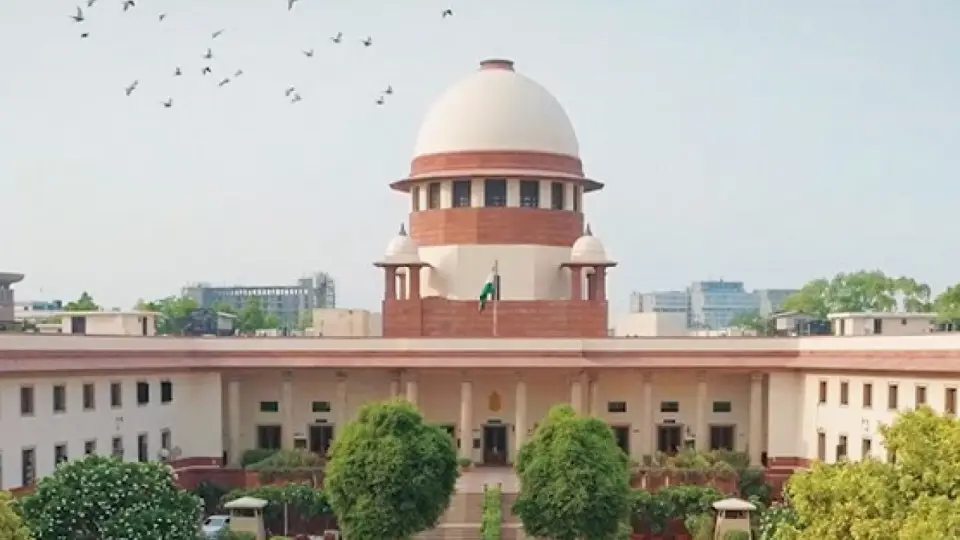
Supreme Court (Supreme Court)
New Delhi: The Supreme Court on Wednesday openly criticised how authorities have handled Delhi’s air pollution. The top court said short-term, stop-gap measures are not working. It asked the government to think of "pragmatic and practical solutions" to the choking smog in the city.
The bench, led by the Chief Justice of India Surya Kant, said Delhi's pollution problem can't be treated like a temporary emergency. It noted that air quality remains in the "severe" category, posing health risks to millions.
The court directed authorities to:
One new suggestion from the court caught transport authorities by surprise.
The Supreme Court asked the Municipal Corporation of Delhi (MCD) to consider temporarily suspending toll collection at nine major entry-point plazas around the city. Lawyers told the bench that long queues at these toll booths were trapping vehicles for hours and making the air even dirtier.
The court gave the MCD one week to decide whether it can pause toll operations and report back. It also asked the National Highways Authority of India (NHAI) to explore moving or shifting the toll booths so traffic flows smoothly without long jams.
To make up for any revenue losses from temporarily stopping tolls, the judges suggested that a portion of the collections could still be shared with the MCD if booths are moved under NHAI’s management.
Pollution levels in Delhi and nearby towns have stayed dangerously high for days. The government has already activated Stage-IV emergency pollution controls, under which construction stops, older trucks are banned, and offices run at reduced capacity.
These measures have hit daily-wage workers hard. Many construction labourers say they have no income, little savings, and few support systems. Some already have returned to their villages.
The Supreme Court pointed out that while wealthier sections can afford indoor air purifiers, expensive cars, and generators, poorer residents face the harshest health risks. The court said there must be a fairer approach to the crisis.
One key worry is that only a small fraction of affected workers have been registered for compensation. Delhi Government officials told the court that only about 7,000 out of 2.5 lakh construction workers have been verified for payments so far.
The Supreme Court has asked officials to report back on progress quickly. It stressed that making plans that last beyond a few days is essential. Pollutants like vehicle exhaust, construction dust and industrial emissions don’t disappear overnight and neither will the daily struggles of workers without income.
As winter deepens and smog forms again, Delhi’s pollution problem remains one of the biggest public health and policy challenges for the city and the region.








Copyright © 2025 Top Indian News


